Medium Description
Cone 10-11 white stoneware clay was used to make the parts. After drying, bisque firing to cone 08 was followed by spraying a commercial blue glaze over the entire piece. This was fired in oxidation to cone 6, a low stoneware temperature. The "end result" was very unsatisfactory. The piece was re-fired in reduction, to cone 10-11 in a soda, wood fired kiln. Reduction firing is a method of reducing the oxygen and or increasing the combustable fuel to create a reduced oxygen atmosphere in the kiln, which has an affect on the clays and glazes that does not occur in oxidation, an oxygen rich environment. Cone 10-11 is around 2250 degrees Fahrenheit. Iron melts at 2000. Soda ash, in a liquid is sprayed into the kiln at 2250 degrees which has an often unpredictable affect on clays and glazes. The mystery of the unpredictability is for me, what is so enticing about wood, soda and salt firing. These methods most compliment my work.
Artist Description
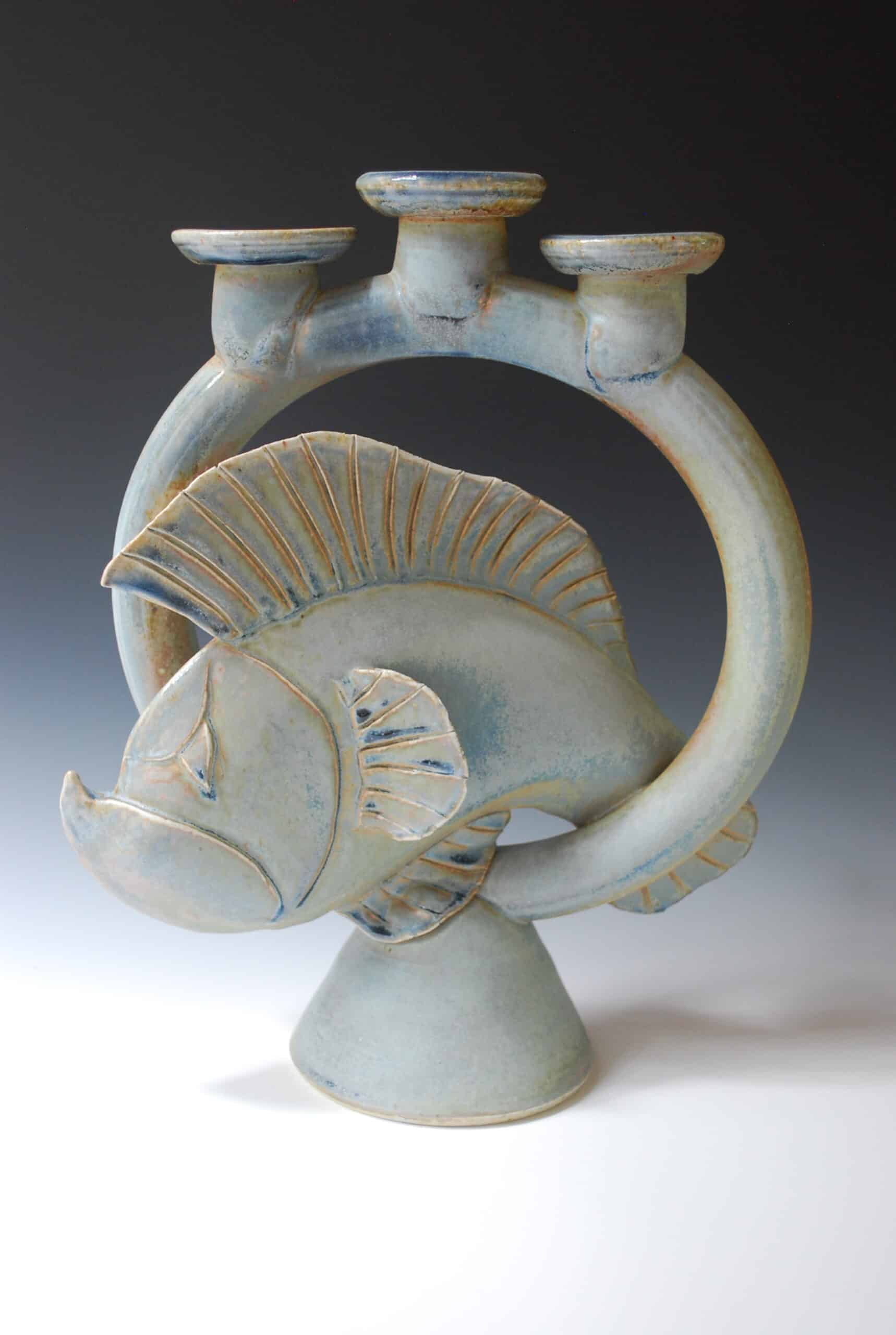
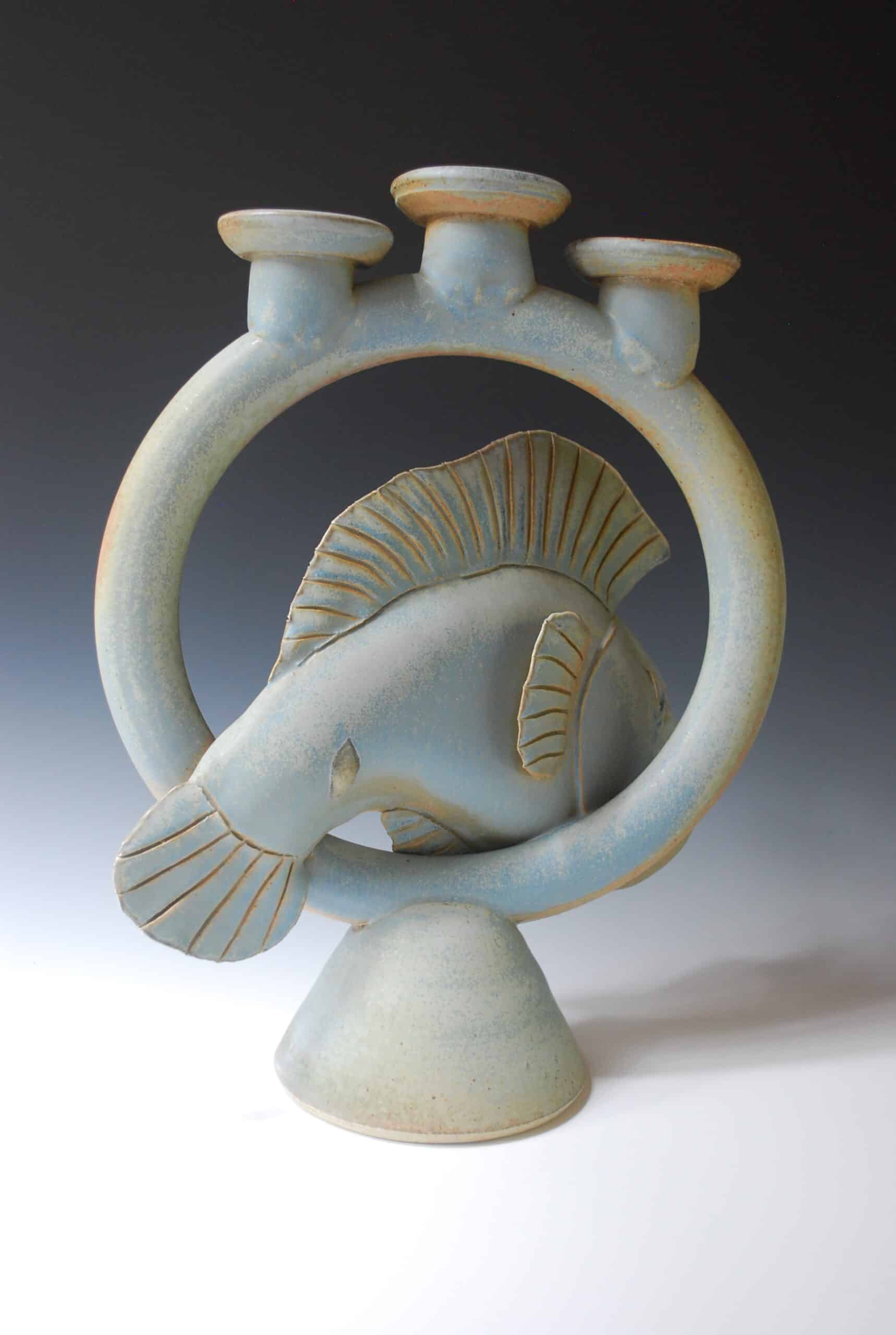
This candleholder is a functional object. It is also non-traditional and sculptural. It is one of an ongoing series dealing with my attempt to draw interest to overfishing the oceans. This fish is angry because we have caught and eaten his friends and relatives. Now he has been caught but survives by doing tricks for entertainment.
The body of the fish is made with slabs in 2 parts, which are laid over styrofoam forms. Next the hollow ring, the base and the 6 candle bases are made on the wheel, 8 pieces in all. The fish body parts are attached, stuffed with newspaper for support and the facial features and gills are carved into the clay. Fins are cut and attached. Wheel parts are trimmed and assembled. The tricky part of attaching the fish to the ring is the final construction step. Glazing and firing methods are stated in the above section.
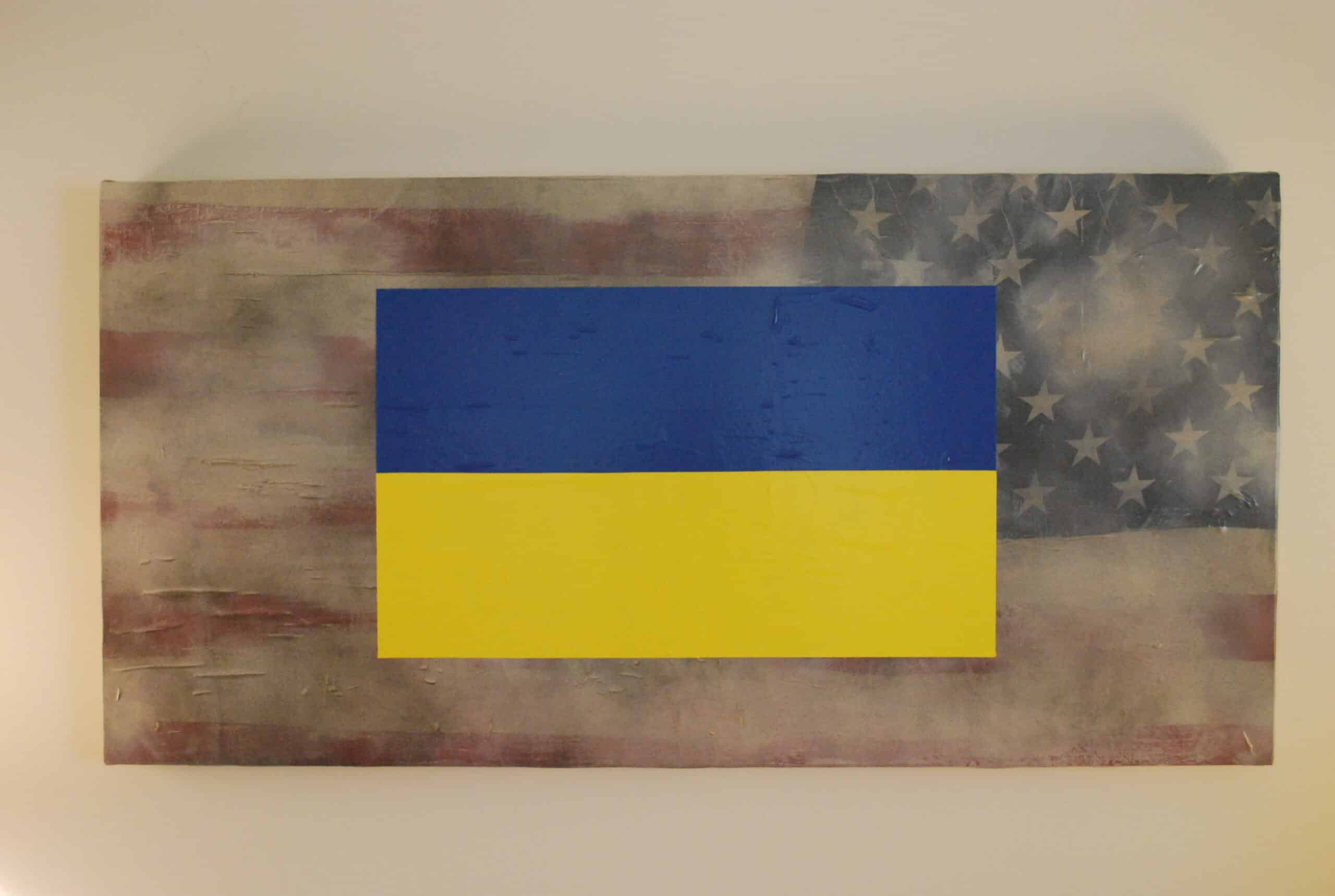
My work is almost all ceramic with a limited number of painting and sculptures that may incorporate clay and other materials.