
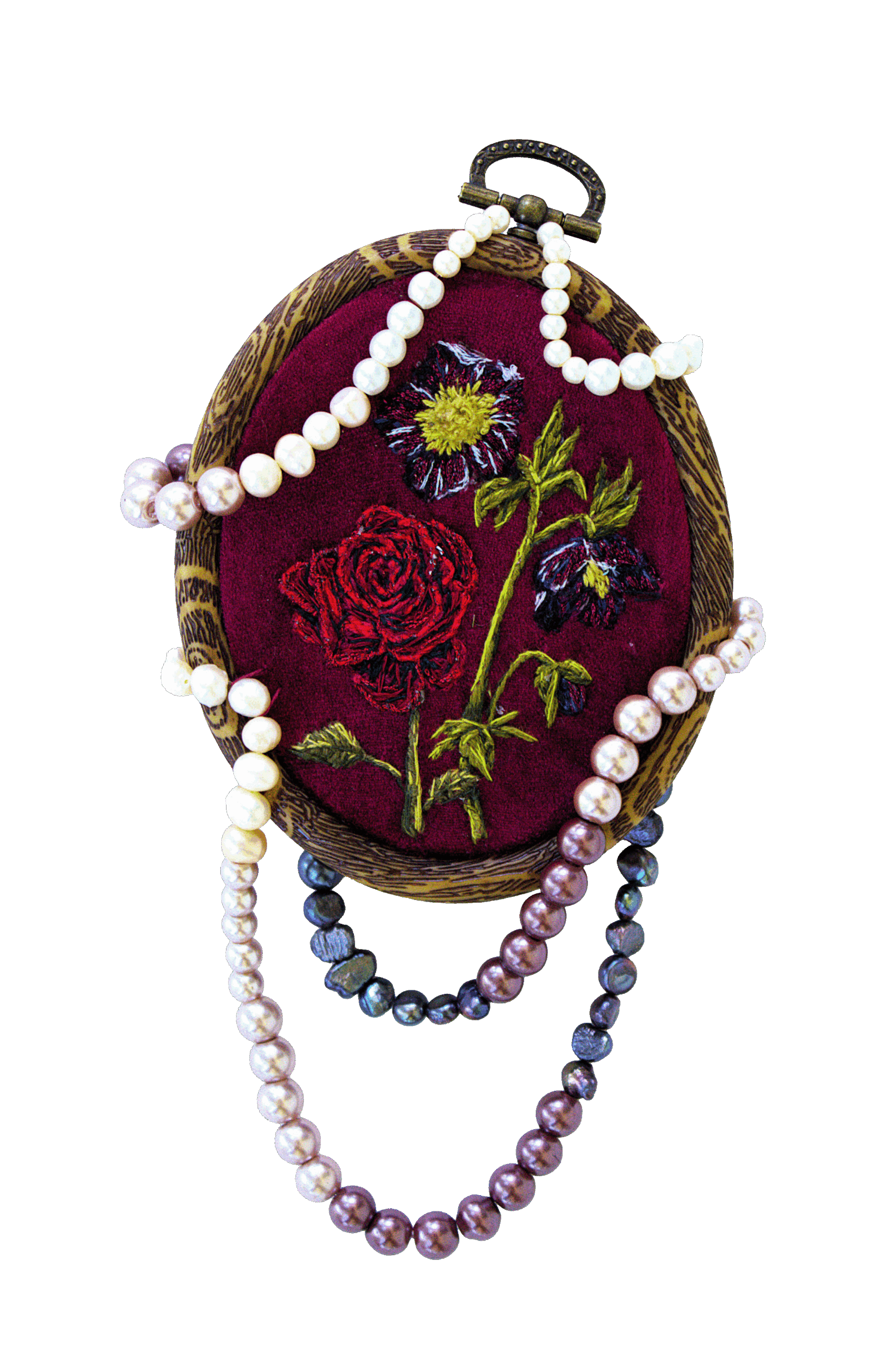
Cardinal Sin
Medium Description
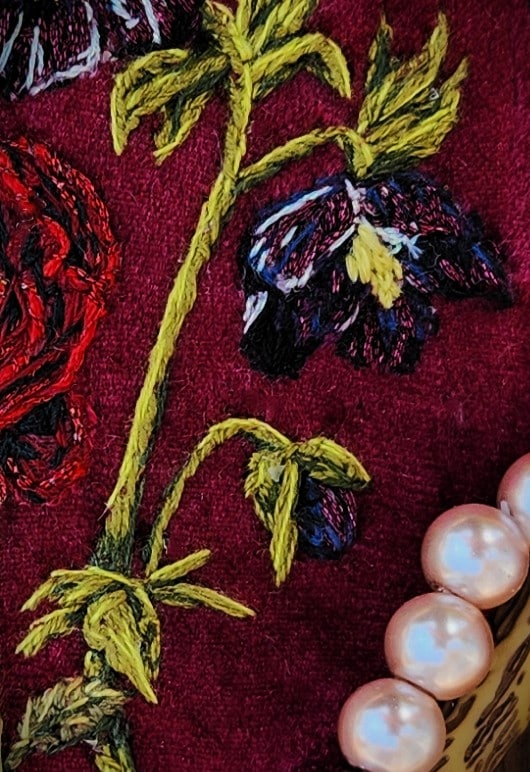
I use the traditional feminine craft of embroidery, taught to me by great-grandmother, to discuss the generational trauma inherited by Fundamentalist women. Velvet and the wood textured hoop allude to the materials of church pews, serving as religious iconography. The pearls, in addition to the more universal symbolism, were bequeathed to me by my grandmother; they hail from her jewelry making practice highlighting the long line of domestic feminine craft within my own family. Media: Embroidery on velvet, cultured pearlsArtist Description
In reference to “The Scarlet Letter,” this piece considers the themes of Hawthorne’s novel in the context of modern day religious Fundamentalism. The rose symbolizes a call for living in truth by acknowledging that none are exempt from human nature. The black flower, though unidentified in the novel, is represented in this piece by a Hellebore, or Lenten rose. The Lenten rose’s nomenclature is so given because it blooms during Lent, a time for penance in Christianity. Like hidden “sin,” the Lenten rose thrives in the shadows, symbolizing scandal, anxiety, and delirium. During the Medieval period, the Lenten rose was used as a medicine to expel evil spirits; however, the flower is poisonous, and this practice often resulted in death, symbolizing the counterintuitive methods of Fundamentalism. Modern Fundamentalism closely emulates puritanical society, favoring gender-based double standards and a pious reputation over accountability. Forgiveness and peace are better represented by acceptance, accountability, and growth, while a culture of condemnation and public humiliation leads to internalized festering shame and separation from both the divine and oneself.